Month: October 2025

  • Madness is a Virtue, my dear.

    Madness is a Virtue, my dear.

    The Girl

    “To be a woman is to be mad.

    To inhabit that madness is to rage.

    To rage is to burn in femininity.

    Like gasoline tears to a flame.”

    When people talk about healing, they speak highly of positive thinking. But what about rage? What about the endless pit of fire around brokenness? Should I burn in silence forever? Should I be the “nice” person until it drives me crazy?

    I tried to select my thoughts. I tried to embody forgiveness and kindness. But what if I’m not nice? What if my kindness was stripped out of me, leaving me bare and vulnerable to endure people’s gazes? What do I even need to be “nice” for? Who said womanhood was nice, in this world? Has anyone stopped to think about us? Of course not.

    I hate some men because I’m scared of them. I’m scared of what they did to me, and what they could still do. At twelve years old was the first time I noticed their predatory gaze. At sixteen, I was assaulted. At seventeen, I was forced to take a pregnancy test by an adult who was neither my family nor a doctor. At the same age, a man seven years older stalked me and cornered me until I gave in.

    At twenty, a thirty-three-year-old man coerced me to move in with him. I had nowhere to go and nobody to help me. After six months of physical and mental abuse, I returned to my family’s home, where I was sent back to my abuser. Everybody knew what he was doing to me. Nobody cared.

    During my twenties, I spent countless nights at the mercy of these predators. People want to believe that at that age you’re old enough to know how to protect yourself. But how can you do that when you don’t even know what that is like? I thought that was my life. I thought that was all I was, a commodity for men to use and abuse in exchange for backhanded kindness.

    Never loved. Never cared for.

    I didn’t know what love was, but I thought it was pain.


    The Woman
    feminine-plant

    At twenty-seven, it was the first time I told someone about the SA. Like I gave myself permission, because maybe it wasn’t my fault. Maybe I was just a kid with a crush on a man who should have never even looked my way. But of course, when do they ever resist such “temptations”?

    Unprotected and available, with the innocence of a girl who thought his attention was “romantic.” Having to hide, meeting in dark rooms and desolated lots.

    I think about that girl and I cry, because I know she didn’t know what she was doing. And it’s watching that scene over and over again, like a never-ending horror movie, that makes me write this.

    Already thinking that no one should see this.

    But why would I even hide what they did to me? All those who failed me. All those who failed that child. Where do they end if I stay “nice” and quiet?

    So I raged. And I used my visualization method to get bloody revenge. Really cathartic!

    I don’t care what people think about this anymore. I don’t fear judgment from those who have never been in my shoes. I can dream what I want; I can dream even worse.

    But instead, I go to therapy, I read self-help books, I meditate. Instead, I journal, I drink water, and I say my affirmations. Because that’s what they told me I should do. Because that’s what it means to be “nice.”

    But guess what? That’s what ruined me.

    Madness is a virtue.

    I’ve discovered this a little late in life. I definitely recommend it. I’d rather go mad, I’d rather people think I’m insane, than keep carrying all this pain with me. I can’t do it anymore.

    Being nice is killing me slowly.

    If you wonder how, well, I think we all do it in different ways. Mine is food and neglect. Those are my weapons of choice. I do that instead of achieving my murderous dreams.


    The Mad One
    feminine-lake

    In my thirties, I found that men treat me like I’m invisible now, because I’m overweight.

    And isn’t that a beautiful discovery?

    It turns out my “unattractiveness” is my protection. As cruel as it seems, it was amazing for many years, to feel that freedom, to be ignored, to never feel sexualized anymore.

    What a blessing.

    Unhealthy? Obviously. This is the type of armor that becomes a jail real fast, and silently, it eats you alive.

    I wanted to disappear. I wanted to be safe. But it’s killing me.

    So are those my only choices? To be or not to be? How ironic for a writer!

    Ophelia feels oddly familiar in times like this. It’s hard not to revert into that helpless girl I once was, even when I know there’s only trauma left.

    Even though I’m now a grown woman who will never again allow or entertain insulting and harmful behavior, it feels like my time in that invisible cage was useful. But now it’s time to connect the heart and the mind, and it’s not looking very promising.

    That little girl no longer exists, but I found comfort in the shadows. Now the light seems too much to handle.


    The Lighthouse
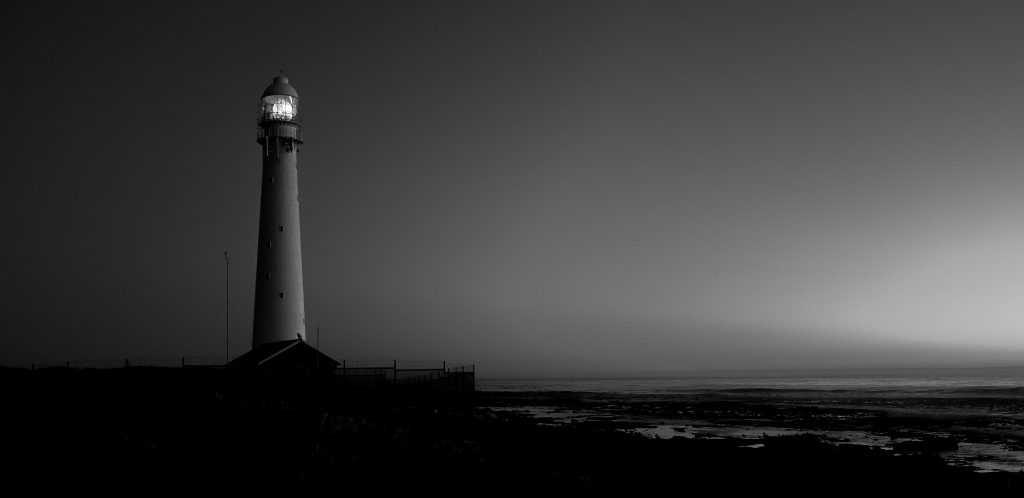
    One of the reasons why I chose By the Lighthouse as the name of this umbrella project is because, since 2024, my goal has been to walk into the light.

    Easier said than done, right?

    Opening my life this broadly is not a choice I’m making blindly. I think my words are my power and my shield. I build, and I can destroy, with them. They are my most precious gift.

    I’m lucky enough to know more than one language, and currently learning more so I can expand beyond English. I built this platform to bring attention to my work. I’ve done it through different projects that are not necessarily close to this rant, but they all represent a part of me. Some are old ones, some current, and others, others I’m manifesting for my future self.

    In my last piece, The Myth of Grief, I revisited some old wounds. What I’ve been looking for is the reason behind my attachment to some bad habits.

    One thing about shadow work is that you know where to dig, but you’re completely oblivious to where you’ll end up.

    My sadness is like a huge lake, and much of my healing work, but also my creative work, comes from those waters. I have this worn-out bucket that stares at me when I spend a couple of seasons away from the shore. I know exactly what it means. It’s like a siren in the deepest waters; she calls me.

    The reason I can speak about all these atrocious things that happened to me when I was younger is because I’ve been swimming in this lake for decades.

    It’s like my pen needs the dark mud at the bottom, like the ink is not ink, but mire.

    I’m trying to heal this part of myself. But more than healing, it feels like I’m trying to let go. There is an incredible stubbornness in me. It has served me well more than a couple of times, but it has also made things too complicated, more than I can count.

    I have a very bad habit of falling in love with the worst comfort zones.

    Is that a toxic trait? Probably.

    You could say my taste for men pivoted to my taste for them. I’d say they’re both equally dangerous.

    I sent a text to my old therapist today. The reason is that I’ve come this far on my own. I can continue analyzing myself until the end, but it won’t break the patterns. I knew this was a mountain of work for me to tackle, and I knew I was going to end up calling her.

    It doesn’t feel as bad as I thought it would. Maybe there’s a little annoyance in there, on top of my old stalker, anxiety. She likes to remind me that this is my fault and I’m not doing enough. But somehow, it got to a point where all I do is roll my eyes at that.

    Not ideal, but somewhat better.

    I guess I’ve become more vindictive with age, because I also wish for my anxiety to drop dead someday. A girl can dream, am I right?


    Did you see yourself somewhere in this monologue?

    I hope you didn’t. I hope you think I’m crazy, or that I’m lying.

    But if you did, I’m really sorry. I can’t say it enough: I don’t wish any of this on anyone with a soft heart.

    If it feels right, you can reach out to me. I’ll try my best to listen, maybe over some long-distance shared coffee, or tea, or wine. You choose.

    I probably won’t have the answers, but I can lend you a safe space to just be.

    If there’s anything I want to be my legacy, it’s that in my presence, people felt free to be exactly who they are.

    Without judgment, and with a lot of love.

    Pfff. Maybe I am nice after all. 😉
  • The Myth of Grief – by Lissette von Falkenstein | Poem & Analysis

    The Myth of Grief – by Lissette von Falkenstein | Poem & Analysis

    Opals gleamed in the darkest night,
    They reminded me of a planet far away,
    A world I had once dreamed of in another realm.
    Around it, seven moons danced in silence,
    Like comets and falling stars.
    A voice sang within my saddest melodies,
    Yet it held me, and for the first time, I felt loved.
    Is it enough to live like the same poles of a magnet,
    Always pushing apart?
    Together in the country of lost causes,
    Stripped bare by the weight of missed chances.

    Beneath a forgotten fig tree, I first discovered grief.
    Whether as a child or as an old woman,
    I asked if longing ever ends.
    Or if I must carry these ghosts forever.
    I recognized them, one by one,
    They belonged to a broken clock with no sand to fall.
    Yet they dwelt inside my house,
    And we remained haunted together, in grim wonder.

    There was a little girl clutching a ragged doll,
    Her laugh broke into all the dusty corners.
    She frightened me most, for she had once been loved.
    A taciturn bride sat beneath the windowsill,
    Never turning when I called her name.
    Veiled in her wedding gown,
    I had seen her clutching a silk handkerchief.

    And beyond her silence, in my room stood a black shadow,
    As if I owed her something unspoken.
    Dreading the answer, I never asked,
    Yet I knew her better than any in this haunted house.
    It took me a long time to realize I was alive,
    A longer time still to understand I was not about to die.
    Then I heard your voice calling, telling me it was safe to go outside.
    You smelled of peaches in bloom, smiling like a shy child.
    Now my ghosts wished to move on as well.
    As if there were no delight in haunting without me.

    Among black candles and salted tears,
    I watched them leave, one by one.
    With burnt rosemary thick in the air, there came a knock at the door.
    The little girl ran to my side,
    Her beautiful smile shone as she took my hand, and I smiled back.
    On the threshold, her grandmother waited; I watched them embrace,
    And my chest tightened, bound by bittersweet remorse.
    Was it I who had kept them hostage within my dreadful castle?

    At my doorstep stood horses, a chariot, and an elegant man.
    For the first time, the lonely bride turned and leapt with excitement.
    The gentleman carried himself as one who had seen it all.
    He offered his arm to the once-lonely woman in white.
    Like a father comes to lead his daughter to the church and give her away.

    The last rays of light faded, and the night rolled in.
    I did not need to look for her; I knew she was behind me.
    No one was coming, no one would save us from the ocean dragging us down.
    I had courted her since I first met her, and I had called her.
    She had never given what I asked, yet she kept me company.
    Was it because I had never ceased praying for that prophecy?
    She waited for me to say the words.
    “I want to live,” I said, and she tapped gently on my back.
    As if I had made her proud, as if she had hoped I would choose anything but pain.

    I knew I had to repeat it again and again.
    Until at last I felt I could breathe.
    Had I been holding my breath all this time?
    I heard myself laugh, and the echo told me I was finally alone.
    My ghosts had gone where they belonged.
    Running, shining like fireworks, I crossed the street to find you.
    You’ve lifted me up, you’ve inspired me to stop holding on to the pain, the ghosts, the darkness.
    Instead, now we live.
    Together.


    The Myth of Grief: A Journey from Haunting to Life – Analysis

    This myth is not simply a set of images; it is a map of survival. Every image (every opal, fig tree, moon, and magnet) is a cipher for a lived experience. Lissette writes not as a poet playing with symbols but as someone excavating her own underworld. The piece begins in space: opals gleaming like distant planets, a world once dreamed of. Opal is her birthstone and the birthstone of the man who helped her through his music: a singer, an artist whose work taught her discipline and gave her permission to reach for happiness. Around that planet, seven moons dance, echoing the seven members orbiting the founder of his group. The cosmology is both real and mythic: a personal pantheon.

    The magnet image cuts deeper. She does not say “two magnets attracting,” but “same poles”, a scientific truth about repulsion. It’s her way of saying that love and healing can exist even when bodies cannot touch, even when lives are separated by oceans. She can be inspired by someone, even loved by them in a spiritual way, but still never meet them. The magnet is the paradox: closeness that cannot collapse into contact.

    Then the poem descends. The fig tree (a literal tree from her childhood, abandoned at the edge of her grandparents’ property) becomes the gatekeeper of grief. It holds memories of her grandmother who died when she was nine, memories that have stayed vivid for decades. This is where she introduces the “broken clock with no sand,” time stopped by loss. Ghosts take up residence inside her house because they have no other place to go. She’s been haunted by them, but she’s also been their host.

    The little girl clutching a ragged doll is not just an image but a self-portrait: the child who was loved by her grandmother and then, not really loved like that ever again. The taciturn bride beneath the windowsill is another self, the potential version of her who would one day be walked down the aisle by her father. But her father too has passed away. These aren’t ghosts of strangers but ghosts of potential selves, “lives unlived” in the sense that Kierkegaard, or even Derrida, might speak of specters: presences of what will never be.

    The black shadow in the room is where the poem edges closest to death. She has courted death for years, not in a melodramatic way but as a constant background; a prophecy whispered down from her family, where many died young. Water becomes the metaphor for depression, the ocean dragging her down. She writes that she called to this shadow, that she wanted release, but it never gave her what she asked. Instead, it kept her company. This is the hard truth of depression: it becomes familiar, a companion even when it’s killing you.

    And then there is the voice, the singer again, but more than a man: a living peach tree in contrast to her forgotten fig tree. When he was born, his parents planted a peach tree; when she was a child, her fig tree was left to die. The voice smells of “peaches in bloom,” a direct inversion of the tree her family abandoned. His music calls her outside, telling her it’s safe. She doesn’t erase her ghosts, but their hold weakens. “As if there were no delight in haunting without me.” This line is devastating, she recognizes that some part of her was keeping the ghosts alive.

    That’s where the ritual arrives. Black candles, salt, rosemary: classic tools for banishing, protection, and cleansing. She imagines her younger self being reclaimed by her grandmother, the child she once was finally allowed to leave the haunted house. This is a psychic ritual, a witchy exorcism of trauma. And then she releases the bride (the potential marriage she’ll never have with her father by her side) into the astral. She allows that version of herself to fulfill its destiny somewhere else, so it no longer needs to live inside her. It’s not denial; it’s radical acceptance.

    The chariot and the elegant man at the door are not Disney tropes. They’re archetypal: the father, the psychopomp, the part of her psyche that escorts lost potentials to their resting place. By letting them go, she opens space for different outcomes in her real life, not focusing on what she can’t have, but on what she can build.

    Finally, the poem returns to the ocean (to depression and death), and speaks the unspeakable: “I want to live.” She realizes, mid-writing, that part of her may still have been wishing for the end, still clinging to bad habits and self-destructive tendencies. But in saying the words out loud, she breaks the prophecy of dying young. Death taps her gently, proud of her choice, and recedes.

    And so the ending becomes a reversal of the beginning. Where the first stanzas are all cosmic distance, broken clocks, magnets repelling, the final stanzas are breath, laughter, footsteps, crossing a street. She is no longer a ghost; she is a woman moving. She writes a new prophecy: to live with the person she loves, freed of ghosts, not in the astral but in the real. The poem is both a ritual and a manifesto, a quiet but defiant act of self-resurrection.

    This isn’t just poetry. It’s a document of transformation, a record of someone who carried grief, potential, and death in her house for decades, then decided to open the door.